Monday, April 28, 2014

Roy gets a Little Suite Tooth


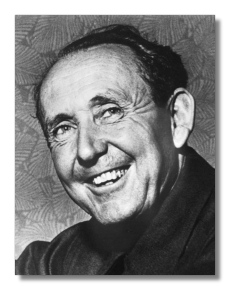
Variety is the spice of recital, and there's no easier way to accomplish this than the mini-suite.  Tiny dabs of color and movement built to contrast one another, there are plenty of stellar examples (such as Little Suites by Lou Harrison and Leon Kirchner) and today's Suite is one of the best.  While the great Roy Harris is primarily known as a symphonist he did whip up a CD-full of piano pieces, most notably his Piano Sonata, op. 1 (named by Hunter Johnson as American piano music's "Declaration of Independence") and his two sets of American Ballads.  I'd like to submit my vote for his best piano work as his Toccata, but luckily for Forgotten Leaves his Little Suite is a hair's-breadth close second (and most certainly not the first loser).


The first movement shows off Harris's mastery of both singing lines and resonant modal harmonies*.  While the melody seems simple enough, the clanging voice-leading underneath is never the same across its six iterations.  After each scale, Harris rings the low bells and holds them with the middle (sostenuto pedal), allowing the pianist to change the pedal for the upper chords freely.  The effect is gorgeous, the kind of movement that elusive middle pedal is made for, though I'm not sure how you can use the una corda pedal at the same time you use the other two.


Now, before y'all's cry foul about that third movement being spread across two pages, notice that the first page's portion is only two lines long, and the fourth movement is only two lines long.  Therefore, dear readers, one could simply put "Slumber" under "Sad News" and everything would be dory of the hunky persuasion.  However, "Children at Play" just isn't profound enough for a closer, so shush.  "Sad News" makes good use of a slow 7/8 and wavering, harp-like, clashing chord movement.  Harris was a lifelong student of Renaissance music, and the last two measures of "Sad News" display such sweet-'n'-deft harmonic counterpoint Fux could faint.  "Children at Play" bounces between D major and B-flat major in the left hand while the right sticks to the former, though harmonic variation slips in as fast as a two-year-old drops one toy to play with another.  Methinks Harris was a big fan of 7/8 in all its subdivisions, and if he intended the Suite as pedagogical music young students may have more practice than they want in store for them.  Despite the shallow sonority of the movement it's actually the most difficult to perform, putting the pianist's skill at hand separation to the test.  Thankfully things slow down for "Slumber", bringing us back to the world of chorales.  The simplicity here is quite deceptive, its gentle departures from functional tonality ornamented by pinging fifths that suggest an endless breadth of emotion.  

Harris was a pioneer of that brand of broad, polytonal lyricism that would become the American national classical language in the 40's and 50's, but works like the Little Suite and the Toccata show why he did it better than pretty much anyone else (except Copland, of course).  His harmonies rang deeper and truer than the rest of the pack, and talking about them is no substitute for hearing them, and Geoffrey Burelson made a meal of the Little Suite and the rest of Harris's ivory ticklers on his CD for Naxos.  As the whole Little Suite isn't even four minutes long I don't see the harm in the copyright infringement of me including his performance below, and only a cold-hearted orb would shut down these delightful morsels.


~PNK

*Yes, yes, I did notice how the tune devolves into "Joy to the World", and no, I'm not putting this article off until Christmas just to make that reference more cute, thank you very much.

Tuesday, March 18, 2014

A Hyllning for Hilding from Across the Baltic


Some of you may remember my article on Hilding Rosenberg's sixth Improvisation, and that piece is a mere taste of the work of one of the most inspiring Scandinavian composers of the 20th century.  Some of you may also remember Poland's border on the Baltic Sea, and so it's natural that the good stuff from Sweden would float over to Warsawian shores.  In 1982 the incomparable György Ligeti met Rosenberg and composed a violin & cello duet in his honor, and when the big publishers bother to publish your leaf there's a chance it's pretty boss.


A hyllning is a tribute, and the parenthetical description alludes to the soundworld of Bartók, inarguably the most influential Hungarian composer of all time and pioneer of classical fauxlk music.  All the germ material is set up in the first line, a snakily modal melody in the cello accompanied by doubly-stopped fifths in the violin.  After that it's just a matter of variations, and each twist of the pen proves more inventive and beautiful than the last.  The lines are steadily reduced with each repetition, letting the gradual crescendo cathart like crazy once bar 13 comes around.  The last line ramps the quarter notes, giving the impression of acceleration downward, with lots of insistence pushing the instruments to the final four chords.  Ligeti was a man of seemingly endless range, and while he had previously taken audiences to the borderlands of luscious noise he shows a true mastery of good ol' polytonality here.  As tricky as the double-stops may seem they sound whomping fantastic, especially the last couple of bars with their kneading minor seconds.  I'm not sure who did the recording below but I have a feeling it's the phenomenal Arditti Quartet, modern music's BFF and my vote for Most Unflappable Chamber Group.  I've never seen a Swedish-Polish combo restaurant, but I'd never have guessed that their food would taste so sweet.

(Nice picture, rauthku.)

~PNK

Saturday, March 1, 2014

Bosch's Butt Song


Special thanks to Matt Adelson for suggesting this!

Of all the people who need no introduction on this blog, the most introduction-unneeded is Heironymous Bosch, though you may be wondering why I'm featuring a Medieval painter.  First, look at his painting The Garden of Earthly Delights, one of the most famous paintings in the world:


If you squint at the right panel (hell), you may notice a harp.  An Oklahoma Christan University music student named Amelia was looking over the painting and discovered a hilarious detail in the most insane part of this astonishing painting:


See it?


Your eyes are not lying to you - that's a piece of music on a man's butt.  The right panel is about Hellish tortures, and in this case this man has become an instrument (get it?!?) for a demon.  It's written in the usual format for Medieval music, and Amelia decided to transcribe the song in modern notation.

(Click for larger view)

This discovery of course set the internet on fire.  In addition to Amelia's MIDI realization, there are many other mixes and realizations, and considering how essential his piece is to music history and the fabric of the universe those versions are all awesome.  I'll just include the original MIDI version for brevity's sake, but when a demon threatens you with anal beads after writing a song on your rear end, you'd better play that piece in every possible iteration.


~PNK

Wednesday, February 26, 2014

Babbitt Takes it Easy for Leaf's Sake


While Milton Babbitt's music has long been associated with musical pedagogy, the last word anybody has attached to it is "easy".  Babbitt quickly gained a reputation for writing works of staggering intellectual and technical difficulty, and despite his apparently kindly nature this rep stuck with him throughout his strikingly long career.  He wasn't completely averse to writing easier pieces, though, and one of his more well-known piano pieces is also one of his easiest - Semi-Simple Variations.


Written in 1956 and published as part of Isadore Freed's excellent pedagogical series for Presser, the piece not only structures itself around palindromic rows, but it also serializes the rhythms palindromically, making it an early example of total serialism.  While most musicians recoil from that term as if they had been offered a rat king for lunch, Babbitt maintains a steady, almost jazzy feel, and the experiment is surprisingly pleasant.  The plot thickens when you realize that Babbitt's other pleasant piano piece also dates from 1956, and is even shorter and easier to play, the only leaf I could find Babbitt had mustered in his 95-year life.


Steady readers may remember my article on Hall Overton's A Mood, published in the excellent easy-to-intermediate anthology American Composers of Today, edited by Joseph Prostakoff and supported by the Abby Whiteside Foundation.  It's probably the first and last time Babbitt wrote a piece that the listener could hear in their head by looking at the score - the two hands each start with the germ row at different transpositions and slightly different contours.  The notes are selected in a way not only to appear modal at first, but to also sit on either white or black notes, a plus for younger pianists.  I found a theory class curriculum that uses the piece as analysis homework, and you can see the full spread here if you want to see the "magic square".  Here's the analyzed version:


Of course, that doesn't mean anybody cares, and the people least likely to care are elementary school children taking piano lessons to avoid being drafted to the local youth soccer team.  Robert Taub made a pro recording of the Duet in 1985, but I found a performance by a small child at the Babbitt Memorial in 2011, held in the small recital room at New England Conservatory.  Taub's out-of-print, expensive Babbitt CD might hold a better performance, but you just can't beat the charm of a girl under 5 feet playing it just fine.


~PNK

Tuesday, February 18, 2014

A Vanity - Forget-Me-Not


At 11:46 p.m. on Monday night I finished my first completed original piece in some time, a chaser to my arrangement of Angelo Musolino's Fugato for brass quintet.  Unbeknownst to many I have my own IMSLP page, and there's nothing more enlightening for a classical musician than to try composing on for size.  I keep coming back to the piano, as it was my first instrument and will inevitably be my last, and the piece is titled Forget-Me-Not.  It's only two lines long, but the flowers are small to begin with.  It's like finding a forget-me-not in the keyhole of your bedroom door after midnight.

(Click for larger size)


~PNK

Musolino, Fugato, Bella


Not all anthologies are thick, and while sometimes a thin anthology can seem like a rip-off it can also compliment the few pieces that were included.  4 Short Piano Pieces was an elusive volume published in 1958 by Composers Editions, Ltd., or Accentuate Music - I'm not really sure which one has precedent over the other - and none of the featured pieces ever saw the light of day again, save for a hard-to-research sequence of reprints by the same publisher in different collections.  I found the volume while searching for pieces by Ned Rorem, whose fine-looking Slow Waltz is included as well as pieces by three composers I'd never heard of before: Joseph Maneri, Berge Kalajian and Angelo Musolino.  Maneri (better known by Joe) was a jazz saxophonist and clarinetist who developed a distinctive microtonal jazz language for decades and is still releasing albums.  The demo for his song "Paniots Nine" was used as the introductory music for the brilliant movie American Splendor.  Suffice to say, his contribution, Theme and Three Variations, is the worst of the four.  Berge Kalajian was sucked into film composing after writing a couple handfuls of concert pieces, and that's the last anybody heard of him.  I may do a Re-Composing article on his lovely Piano Piece (Summer 1958), and it sadly appears that it's the only piece of his I'll see without an act of God.  The final piece, Musolino's Fugato, is not only a leaf but so good that I made an arrangement for brass quintet*.


Most fugues start the countersubject at the fifth, but Musolino devilishly starts his at the tritone, and each restatement of the subject is slightly different to fit an attractive, decidedly mid-century tonal language.  The piece is fully formed within the Big American Idiom, with lots of quartal and quintal harmonies, comprehensible melodic snaking and strong architecture.  There are a lot of fanfare moments, all in fourths and fifths for good effect, and he exhibits an expert grasp of dramatic pacing.  Musolino became known in the 50's and 60's for jazz and light classical music, and through his life would develop a unique voice that utilized classical and jazz devices interchangeably.  You can see his brief but delicious Phantasmagorical Episode here for a full show of that language, and if you squint your ears you can see the seeds of it being sown in the Fugato.  The good news is you don't have to squint hard enough, because I made a recording.


~PNK

*I'm happy to send you a copy of my arrangement, BTW.

Saturday, February 15, 2014

Witold's Brass CUBE


Brass instruments were made for fanfares, and any fanfare without one is so lacking it may as well be a waltz.  Late in his career, Witold Lutosławski, one of my favorite composers, was commissioned to write a short series of fanfares for various organizations, and one of them leafed its way into my grasp.

Lutosławski was known for a number of different styles and techniques in the course of his career, including populism, serialism and aleatoric methods, but Fanfare for CUBE uses none of those styles and is perfectly well off doing its own thing.  Mostly written in Debussy's Lydian/Mixolydian mixed mode (a major scale with a raised fourth and a lowered seventh), the brass quintet shows how nice it is to hear the first five notes of a Lydian scale played at once.  It naturally expands and contracts, only breaking the scale in bars 6, 7 and 8 to make a semi-VI-V-vi dim-I resolution.  There's not much more to say, and why bother?  Sometimes a CUBE is just a CUBE.  Here's a recording, along with Witold's Fanfare for the University of Lancaster as a chaser.


~PNK